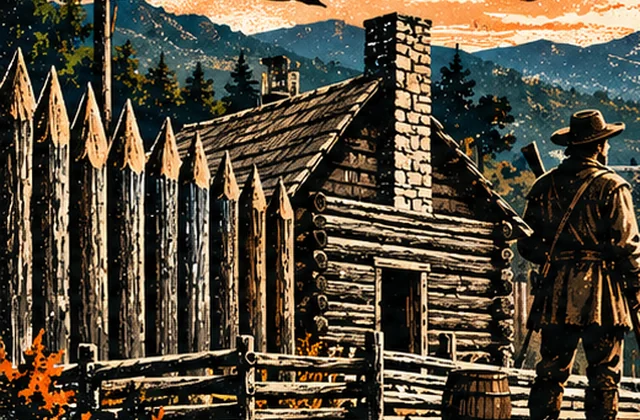
Before 1791
Before Knoxville: Cherokee Homelands, Rivers, and the Road to 1791
The Knoxville story begins before Knoxville — in a Cherokee homeland shaped by rivers, towns, travel and diplomacy.
Read article
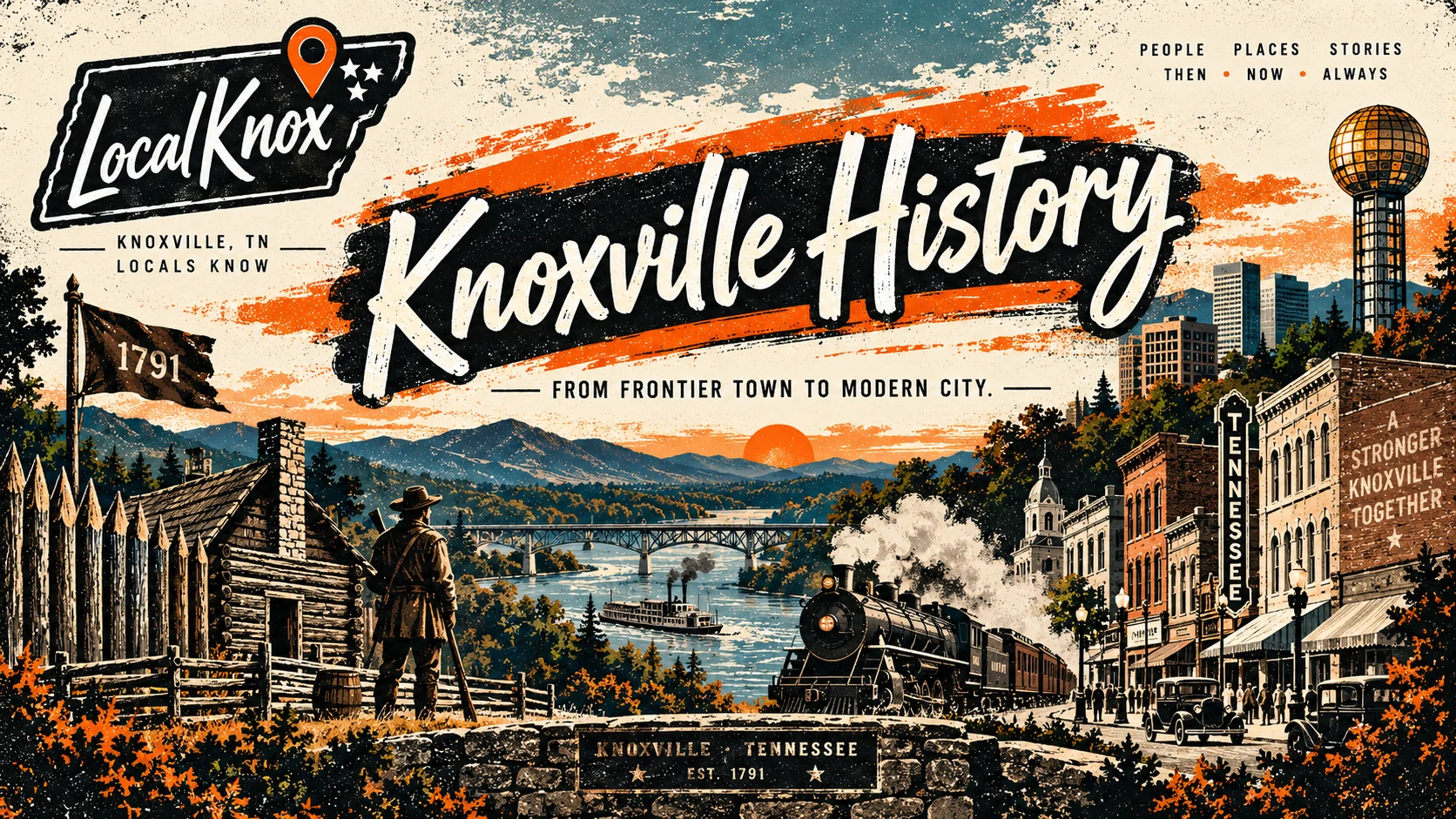
From Cherokee homelands and the city’s 1791 founding to railroads, war, TVA, civil rights, the World’s Fair and downtown’s revival.
Long before a Knoxville street grid existed, the rivers and valleys around today’s city were part of a much older Cherokee landscape.
Knoxville was laid out in 1791 and named for Henry Knox. It quickly became a center of territorial government, education and trade.
Rail connections transformed the economy; the Civil War divided the region; marble, manufacturing and wholesale trade reshaped the city.
Knoxville became central to the Tennessee Valley Authority, a recording and radio crossroads, and a city confronting segregation.
The Sunsphere became the skyline icon while downtown gradually shifted from decline toward housing, preservation, restaurants, arts and daily street life.
The Knoxville story begins before Knoxville — in a Cherokee homeland shaped by rivers, towns, travel and diplomacy.
Read article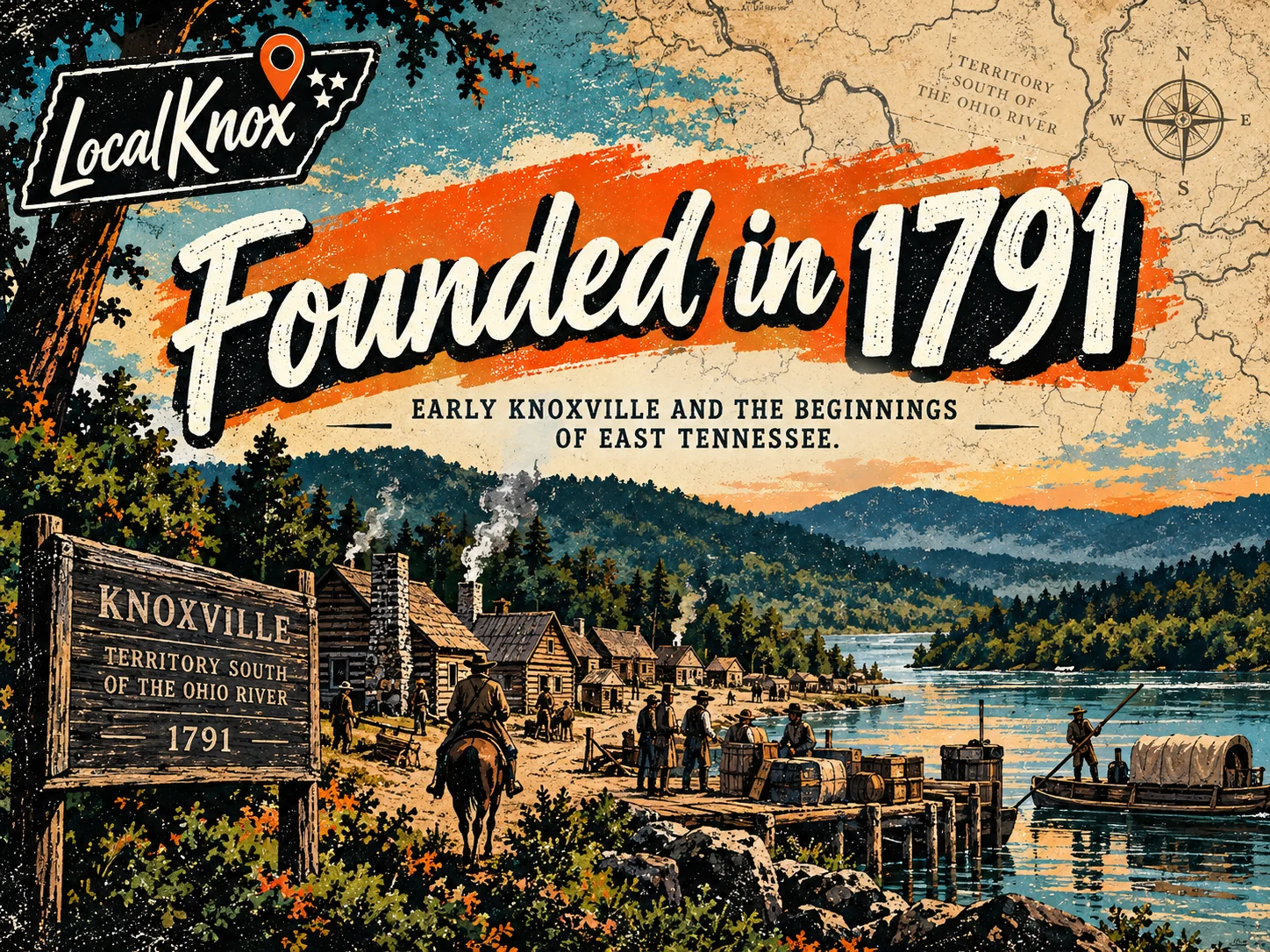
A territorial capital, the road to Tennessee statehood and the city grid that became downtown.
Read article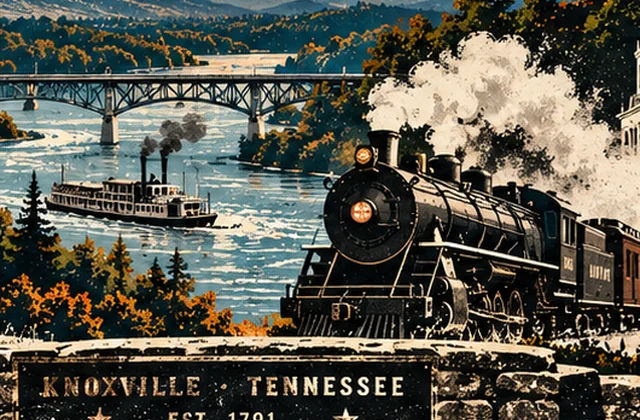
Railroads and regional commerce changed Knoxville from a small river town into an industrial center.
Read article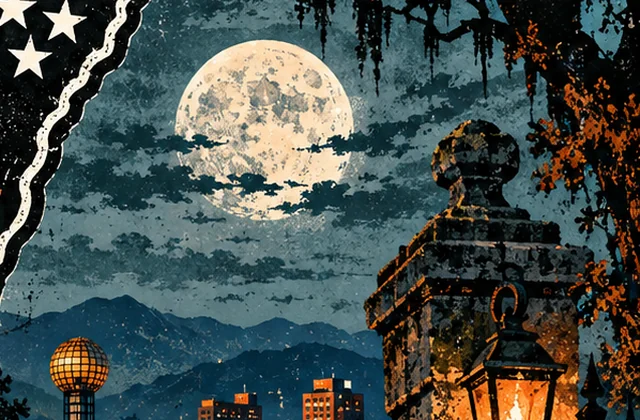
A divided region, military occupation, siege and the Battle of Fort Sanders.
Read article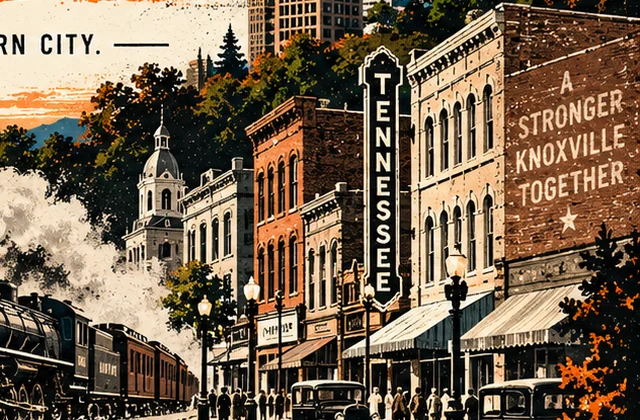
Business, politics, community building and the violence that shaped the postwar city.
Read article
A federal experiment headquartered in Knoxville reshaped the Tennessee Valley.
Read article
Radio, recording sessions and regional performers helped make Knoxville a country-music crossroads.
Read articleSit-ins, integration, student organizing and local leadership challenged segregation.
Read articleThe “Scruffy City” hosted the world, built the Sunsphere and reshaped a major downtown corridor.
Read articlePreservation, housing, restaurants and public investment returned daily life to downtown streets.
Read article