
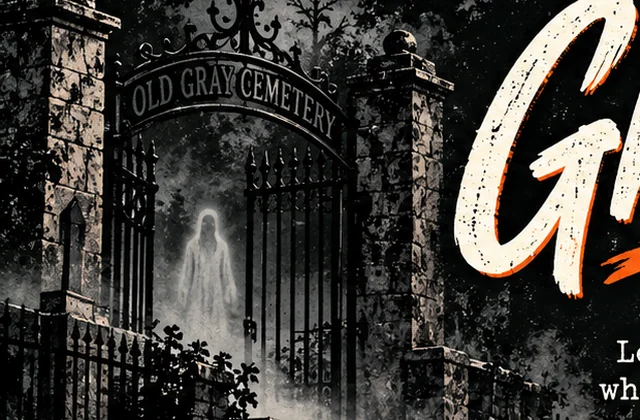
The documented history
Old Gray Cemetery was founded in 1850 and dedicated in 1852, part of the nineteenth-century rural-cemetery movement that treated burial grounds as landscaped civic spaces. Its winding avenues, mature trees, monuments and Victorian sculpture make it one of Knoxville’s most visually distinctive historic places.
The cemetery is named for English poet Thomas Gray, whose “Elegy Written in a Country Churchyard” shaped the atmosphere its founders wanted the grounds to carry. The first burial recorded there was William Martin, who died after a cannon accident connected to an 1851 July Fourth celebration.
Over time Old Gray became the resting place of prominent Knoxvillians as well as people whose names are far less familiar. The cemetery is therefore not one story but thousands of them, layered into a relatively compact landscape near downtown.
What we know
The people, dates, uses of the property and major historical events in this section come from institutional or public-history sources.
What the story says
The paranormal material is tradition, anecdote or atmosphere. It is not presented as historical fact.
The lore
Local cemetery lore tends to work less like a single famous ghost and more like a collection of impressions: a figure noticed between stones, movement at the edge of vision, sounds that seem closer than their source, or the sudden certainty that someone else is walking nearby. None of those experiences can be confirmed by the historical record, but they are exactly the kind of stories garden cemeteries attract.
Old Gray’s strongest supernatural effect may simply be design. Tall monuments obscure sightlines. Trees move shadows across carved faces. The roads curve instead of giving a clean view ahead. In the nineteenth century that scenery was intentional — the cemetery was meant to make visitors think about mortality, memory and beauty.
The respectful way to enjoy the lore is to remember that this is an active historic cemetery, not a haunted-house attraction. The stones mark real people and real families, even when the night stories become theatrical.
Why the story lasts
Old Gray’s ghost stories persist because the cemetery already feels like a place where Knoxville’s past is physically present. The supernatural layer is optional; the history is not.
Original LocalKnox editorial writing. Linked sources support the historical background; they do not necessarily endorse every piece of folklore described here.