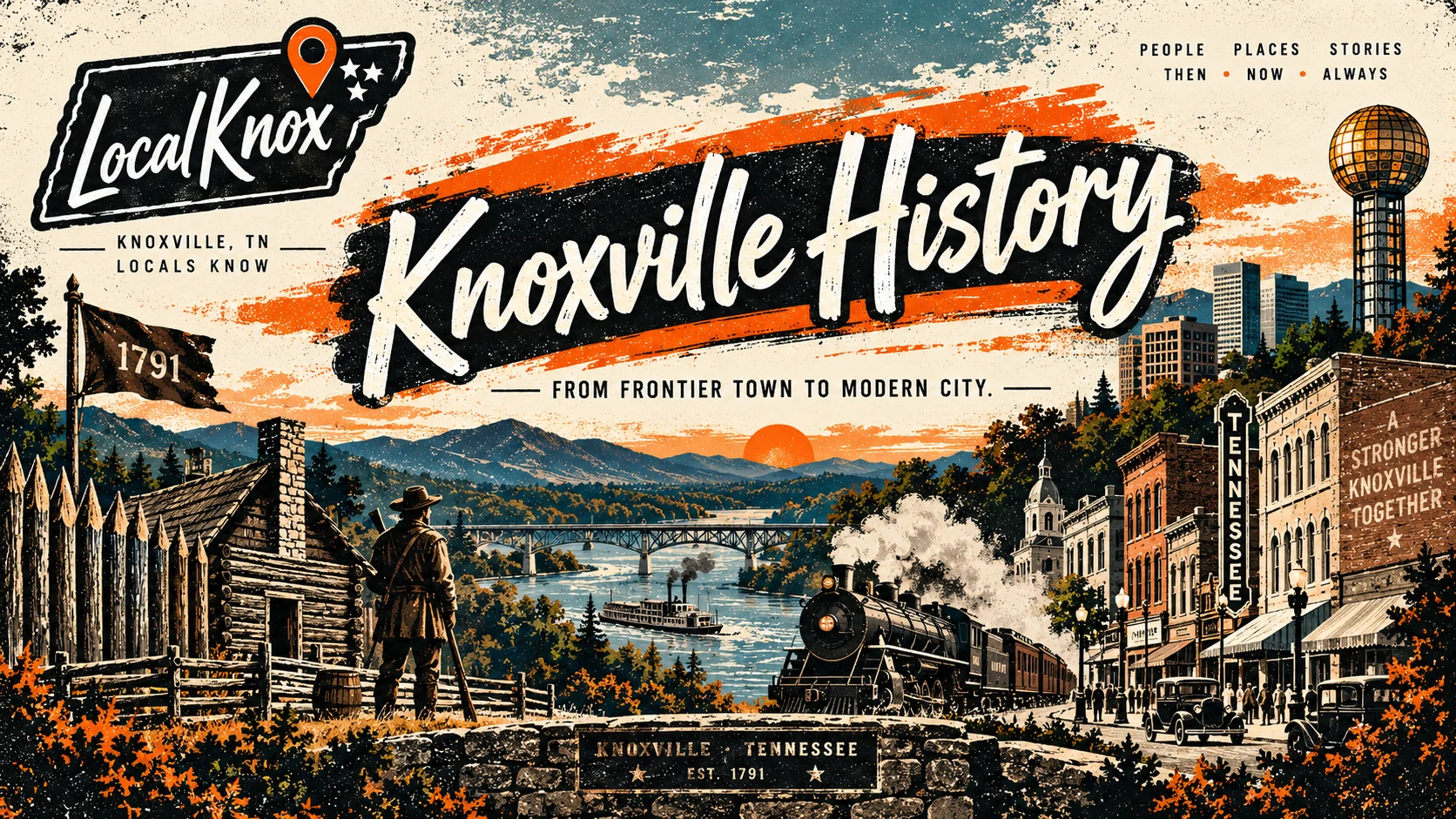
Knoxville's downtown revival was not a single project or sudden turnaround. It was a layered process involving historic preservation, private investment, public infrastructure, arts organizations, housing, restaurants, festivals, and a gradual return of daily life to streets that had lost much of their retail energy in the late twentieth century.
Market Square became one of the strongest symbols of that change. The historic public space survived periods of decline and redevelopment pressure, then regained importance as a place for restaurants, farmers markets, performances, festivals, and public gathering. Nearby Gay Street benefited from theater restorations, upper-floor housing, new businesses, and renewed interest in historic commercial buildings.
The Old City followed a different path, with warehouses and rail-era buildings adapting to nightlife, dining, music, and residential use. Preservation helped Knoxville retain the texture of an older city rather than replacing every block with new construction. That texture became an economic asset as visitors and residents sought walkable districts with recognizable character.
Public projects also mattered. World's Fair Park was reintegrated into downtown life. Greenways and riverfront improvements made the Tennessee River more accessible. The Knoxville Convention Center, transit investments, streetscape projects, and later redevelopment efforts expanded the number of reasons to spend time in the center city.
The University of Tennessee remained a major engine just west of downtown, while new residential development added a population that used downtown outside normal business hours. Restaurants, breweries, galleries, festivals, sports, and music venues helped create the mixed-use rhythm that had disappeared when downtown functioned mainly as an office district.
Revival also created new tensions. Rising property values, redevelopment pressure, parking debates, affordability, homelessness, and the risk of erasing community history became part of the conversation. The challenge for a successful downtown is not simply attracting investment; it is preserving enough local character and access that the city center still feels like a shared place.
Modern Knoxville is now often marketed through the very traits once treated as liabilities: old buildings, industrial remnants, hills, river geography, independent businesses, and a “scruffy” personality. The downtown revival did not erase Knoxville's past. At its best, it made the past usable again.
This article is original LocalKnox editorial writing based on historical sources; it is not copied from the linked material.